The Early Screening Project for Hereditary Blood Disorders aims to encourage individuals planning to marry to undergo early genetic testing to determine whether they share genetic traits linked to these conditions. This initiative empowers individuals to make informed and responsible decisions about marriage based on genetic knowledge.
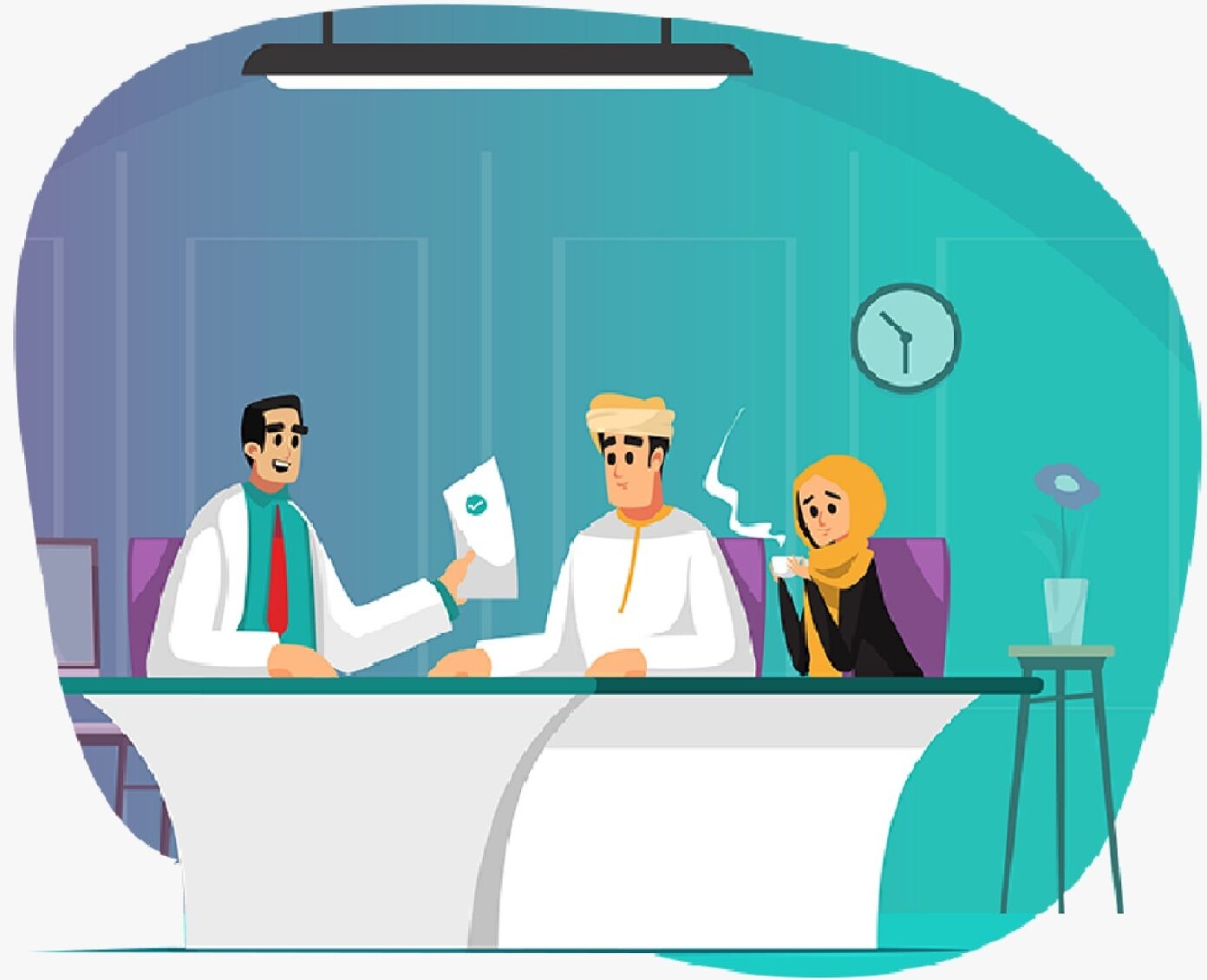

Provide early genetic screening for individuals planning to marry, to identify potential genetic traits for hereditary blood disorders.

Raise awareness about the importance of early screening and its impact on families and society.

Encourage individuals to make responsible marriage decisions that reduce the transmission of hereditary blood disorders to future generations.
Early screening involves testing individuals to determine whether they are affected by or carry certain hereditary conditions. Its purpose is to provide options and guidance to help couples plan for a healthy and safe family.

Screening is available at dedicated clinics located in health centers, referral hospitals, and health complexes across the Sultanate of Oman.

These clinics were created to reduce the prevalence of hereditary blood disorders in the Sultanate, and to help couples planning marriage understand the risks of passing these conditions on to their children. They provide couples with informed choices, such as reconsidering marriage or family planning, to ensure a healthy marital life and prevent the medical, psychological, and social burdens associated with these diseases.

A “normal” result does not guarantee that the individual is free from all hereditary conditions. Current tests focus specifically on hereditary blood disorders. Individuals are encouraged to check for other potential hereditary conditions in their families and consult with a doctor for proper evaluation.

The screening includes conditions such as thalassemia and sickle cell anemia, helping identify hereditary risks at an early stage.

Any individual of marriageable age, regardless of family history, is encouraged to undergo early screening.

The process involves a simple blood test, which is sent to the laboratory for analysis. Based on the results, individuals receive genetic counseling and guidance.

All results are handled with complete confidentiality. Genetic counseling and support are provided to help individuals understand their results and plan accordingly with their future partner.
This interactive tool is designed for awareness purposes only and does not replace professional screening conducted in specialized clinics. The clinic-based tests provide accurate risk assessments and personalized medical counseling.
Affected by a Hereditary Blood Disorder:A person who has inherited two defective genes (one from each parent). They show symptoms of the condition and require ongoing medical care.
Carrier of a Hereditary Blood Disorder:A person with one defective gene. They typically show no symptoms but can pass the gene to their children, especially if their partner is also a carrier.
Free from Hereditary Blood Disorders:A person with no defective genes. They are not affected by the disease and cannot pass it on to their children.